Spinal Decompression in Boise: What It Is, How It Works, and Who It May Help
If you’ve been dealing with persistent low back pain, sciatica, or symptoms associated with a disc problem, you may have come across spinal decompression therapy while searching for treatment options.
But what exactly is spinal decompression? Is it just another name for traction? And more importantly, who might actually benefit from it?
At Juke Chiropractic & Sports Rehab in Boise, spinal decompression is one of several conservative treatment options we may incorporate into a larger treatment plan. Rather than treating every patient the same way, we look at your symptoms, examination findings, movement, and goals to determine which treatments make sense for you.
What Is Spinal Decompression Therapy?
Spinal decompression is a form of mechanical traction designed to apply a controlled pulling force to the spine.
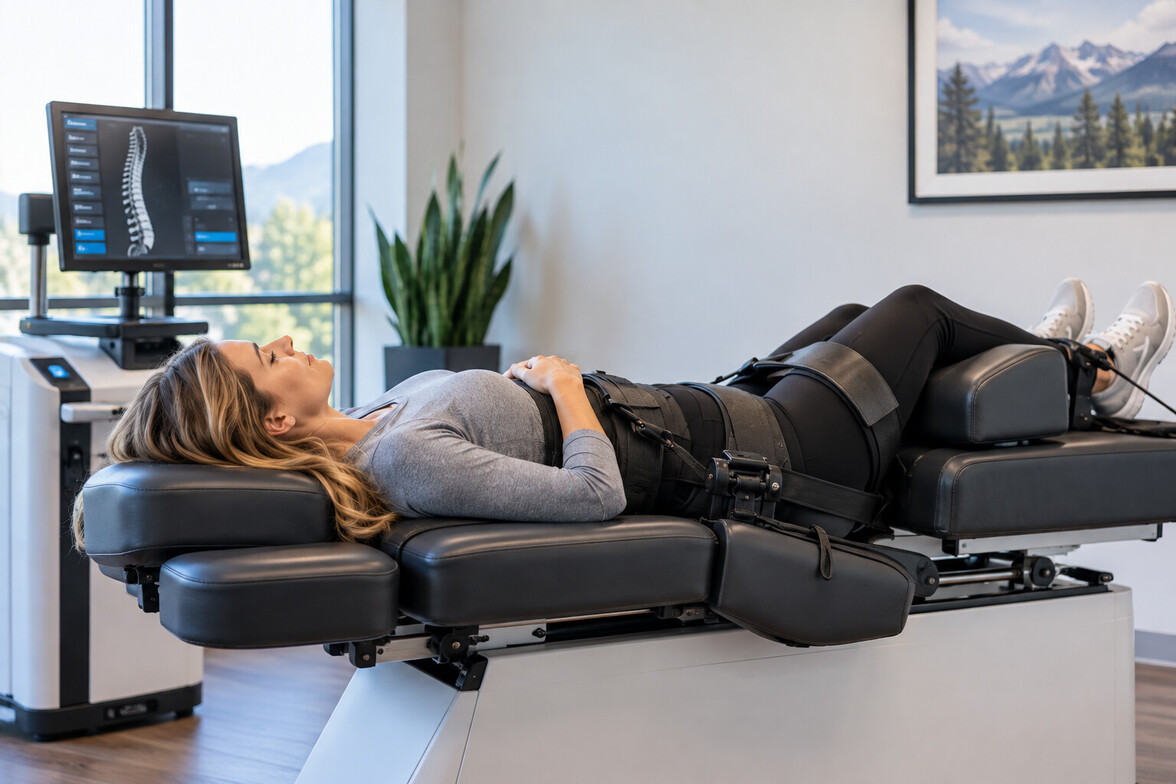
During treatment, the patient lies comfortably on a specialized table while traction is applied to the lumbar or cervical spine. The amount of force, positioning, and treatment duration can be adjusted depending on the patient and the area being treated.
The goal is to temporarily reduce compressive loading on spinal structures and provide a different mechanical environment for irritated joints, discs, and surrounding tissues.
Despite the name, spinal decompression isn't about physically "putting a disc back into place." That's an oversimplification of what is happening.
Instead, think of decompression as one tool for changing the forces being placed on a sensitive area of the spine.
Is Spinal Decompression Different From Traction?
You'll often hear the terms spinal decompression and traction used interchangeably.
There are different types of traction systems and treatment protocols, but both generally involve applying a controlled distraction force to the spine.
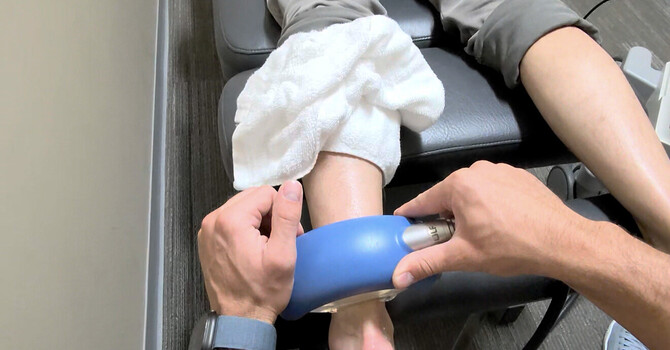
At Juke Chiropractic, we can also incorporate flexion-distraction, a hands-on treatment performed on a specialized chiropractic table that allows controlled movement and distraction of the spine.
The important question isn't necessarily what the machine or technique is called.
It's:
Does this type of treatment make sense for your particular presentation?
What Conditions May Be Treated With Spinal Decompression?
Decompression may be considered for certain patients experiencing:
Disc-related low back pain
Intervertebral discs help distribute forces between the vertebrae. When a disc becomes irritated or injured, certain positions or loads may become painful.
Traction may provide temporary symptom relief for some presentations while other parts of treatment address movement tolerance, strength, and gradual return to normal activity.
Herniated or bulging discs
Disc bulges and herniations are common findings on imaging and don't automatically mean someone will experience pain.
However, when examination findings and symptoms suggest that a disc is contributing to the problem, decompression may be considered as part of conservative management.
Sciatica and radiating leg symptoms
"Sciatica" generally describes symptoms traveling along the distribution of the sciatic nerve and may include pain, numbness, tingling, or other sensations extending into the buttock or leg.
There are multiple potential causes of these symptoms, which is why an appropriate examination matters before deciding on treatment.
When symptoms appear to originate from irritation of a lumbar nerve root, traction or decompression may be appropriate for certain patients.
Spinal stenosis
Spinal stenosis involves narrowing around areas through which the spinal cord or nerves travel.
Some patients with lumbar stenosis find certain positions more comfortable than others. Treatment may therefore incorporate positioning, mobility work, flexion-distraction, exercise, and other strategies based on how the patient's symptoms respond.
Persistent mechanical low back pain
Not all low back pain involves a disc or nerve.
For some patients with mechanical low back pain, traction may simply provide a comfortable way to temporarily unload sensitive spinal structures.
That's why we don't assume that every person with back pain needs decompression.
What Does a Decompression Session Feel Like?
Treatment should generally feel comfortable.
You'll typically lie on the decompression table while a controlled traction force is gradually applied. Many patients describe the sensation as a gentle stretching or unloading of the lower back.
Treatment parameters can be adjusted based on comfort and response.
The goal isn't to use the greatest amount of force possible. More traction isn't necessarily better traction.
Your response to treatment matters more than chasing a particular number on the machine.
Does Spinal Decompression Permanently Fix a Disc?
This is where it's important to separate reasonable expectations from some of the claims you'll see online.
Spinal decompression should not be presented as a guaranteed way to "heal," "reinflate," or permanently reposition a damaged disc.
Disc-related conditions are more complicated than that.
The more useful question is whether decompression helps reduce symptoms enough to improve your ability to move, exercise, work, train, or participate in rehabilitation.
That's how we prefer to use passive treatments at Juke Chiropractic.
They aren't necessarily the entire solution.
They can be used to create an opportunity to move forward.
Why We Combine Decompression With Rehab
This is one of the biggest differences between simply receiving passive treatment and having a broader plan.
Suppose decompression decreases someone's leg pain from a 6/10 to a 2/10.
Great.
Now what?
That's where rehabilitation becomes important.
Depending on the individual, treatment may progress toward improving:
- Trunk strength and control
- Hip mobility
- Spinal movement tolerance
- Hip-hinge mechanics
- Lower-body strength
- Neural mobility
- Tolerance to sitting, standing, bending, or lifting
- Gradual return to work, training, sports, or recreational activity
The goal isn't necessarily to make someone dependent on decompression.
Ideally, as symptoms become more manageable, the patient becomes capable of doing more independently.
Decompression vs. Chiropractic Adjustments
These treatments aren't necessarily competitors.
They apply different mechanical inputs and may be used separately or together depending on the patient.
Chiropractic manipulation involves a relatively quick force applied to a joint, whereas decompression applies a more sustained traction force.
Some patients may benefit from one approach, some may receive both, and others may not need either.
At Juke Chiropractic, treatment may also incorporate soft tissue techniques, mobility work, rehabilitation exercises, and other conservative therapies when appropriate.
How Many Decompression Sessions Do You Need?
There isn't one number that applies to everyone.
The appropriate frequency depends on factors such as:
- Your diagnosis or suspected pain generator
- How long symptoms have been present
- Whether neurological symptoms are present
- Symptom severity
- How you respond to initial treatment
- Your activity and work demands
- What other treatments are being performed
We prefer to monitor response rather than automatically prescribing a large predetermined package of visits.
If treatment is helping, we can progress appropriately.
If it isn't changing the problem, that's useful information too—and the treatment plan should be reconsidered.
Who Should Not Receive Spinal Decompression?
Decompression isn't appropriate for every person or every type of back pain.
Certain medical conditions, fractures, significant instability, some post-surgical situations, progressive neurological deficits, and other contraindications may require modification, additional evaluation, imaging, or referral before traction is considered.
This is one reason an examination should come before treatment.
If your symptoms include new bowel or bladder dysfunction, saddle-area numbness, rapidly progressive weakness, significant unexplained illness, or other concerning neurological symptoms, seek prompt medical evaluation rather than simply scheduling decompression treatment.
Do You Need an MRI Before Spinal Decompression?
Not necessarily.
Imaging can be extremely useful when clinically indicated, but many patients with back pain do not automatically require an MRI before beginning conservative care.
Your history and physical examination help determine whether imaging is warranted.
If your examination raises concern for something that requires additional evaluation, we can help coordinate the appropriate next step rather than simply proceeding with treatment.
Spinal Decompression in Boise, Idaho
At Juke Chiropractic & Sports Rehab, our approach to spinal decompression is straightforward:
Assess first. Decompress when appropriate. Then build from there.
We don't want the entire plan to revolve around lying on a treatment table.
When decompression is appropriate, we can combine it with chiropractic care, flexion-distraction, soft tissue treatment, and progressive rehabilitation to help you transition from symptom relief toward better movement and activity tolerance.
Whether your goal is getting through the workday without aggravating your back, returning to the gym, hiking, skiing, running, or simply moving with less discomfort, treatment should ultimately be built around what you want to get back to doing.
Wondering if decompression makes sense for your back pain?
You don't have to figure that out yourself.
We can evaluate what's going on and determine whether spinal decompression—or another conservative treatment approach—is appropriate for your presentation.
Juke Chiropractic & Sports Rehab
Boise, Idaho
Dr. Jon Juker
Contact Me