Spinal Decompression Therapy in Boise, Idaho
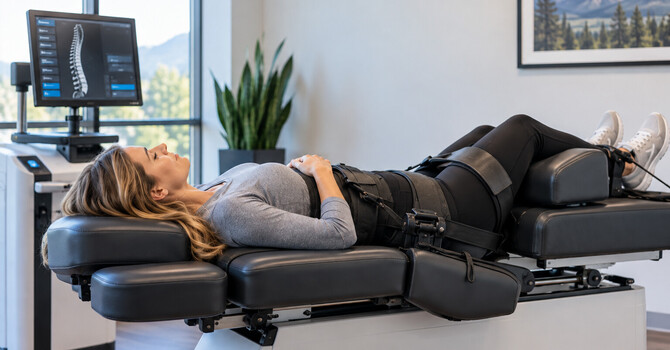
At Juke Chiropractic & Sports Rehab, we offer spinal decompression therapy for patients dealing with certain types of neck pain, low back pain, sciatica, and disc-related conditions. Spinal decompression uses controlled mechanical traction to gently unload the spine and reduce stress on sensitive joints, discs, and nerves.
Treatment can be applied to either the cervical or lumbar spine and is customized based on your symptoms, examination findings, and comfort. When appropriate, we combine spinal decompression with chiropractic care, soft tissue treatment, mobility work, and exercise rehabilitation to address both symptoms and contributing factors.
How Does Spinal Decompression Work?
Spinal decompression uses a specialized traction table to apply a gentle and controlled pulling force to the spine. The amount, angle, and location of traction can be adjusted depending on whether treatment is targeting the neck or low back.
By temporarily reducing compressive forces through the affected region, decompression may help decrease irritation, improve mobility, and make movement more comfortable.
Depending on the condition, spinal decompression may be used to help:
-
Reduce mechanical stress on spinal discs
-
Decrease irritation of sensitive spinal nerves
-
Improve spinal mobility
-
Reduce muscle guarding and stiffness
-
Improve tolerance to movement and activity
What Conditions Can Spinal Decompression Help?
Spinal decompression may be considered for several neck and low back conditions. Whether it is appropriate depends on the source of your symptoms and findings from your examination.
Conditions that may benefit from spinal decompression include:
-
Sciatica and radiating leg pain
-
Lumbar disc bulges and herniations
-
Cervical disc bulges and herniations
-
Lumbar or cervical radiculopathy
-
Degenerative disc conditions
-
Certain cases of spinal stenosis
-
Chronic low back pain and stiffness
-
Neck pain and stiffness
-
Arm pain, numbness, or tingling associated with nerve irritation
Because similar symptoms can have different causes, we evaluate your condition before determining whether decompression should be part of your treatment plan.
Lumbar Spinal Decompression for Low Back Pain and Sciatica
Lumbar decompression targets the lower back and is commonly considered when symptoms involve disc irritation, nerve-related pain, or persistent compression-sensitive low back pain.
For patients experiencing sciatica, symptoms may include pain, numbness, tingling, or discomfort traveling from the low back or hip into the leg. Determining what is contributing to those symptoms is an important part of deciding whether decompression is appropriate.
Rather than relying on traction alone, we may combine lumbar decompression with chiropractic treatment and progressive rehabilitation to improve movement, strength, and tolerance to everyday and athletic activities.
Cervical Spinal Decompression for Neck and Arm Symptoms
Cervical decompression uses controlled traction to gently unload the neck. It may be considered for certain patients experiencing persistent neck pain, stiffness, disc-related symptoms, or nerve irritation extending into the shoulder, arm, or hand.
Treatment intensity and positioning are adjusted to the individual. Our goal is to make treatment comfortable while targeting the region contributing to your symptoms.
When appropriate, cervical decompression can be combined with manual therapy, chiropractic care, mobility exercises, and strengthening to address the broader factors contributing to neck and upper-extremity symptoms.
What Does Spinal Decompression Feel Like?
During treatment, you will lie comfortably on the traction table while the system gradually applies and releases a controlled pulling force.
Most patients describe decompression as a gentle stretching or unloading sensation. The amount of traction can be adjusted throughout the session based on your condition and comfort.
A typical treatment lasts approximately 10–20 minutes, although treatment time and recommendations vary based on the individual.
More Than Just Decompression
Our goal isn't simply to put you on a traction table. We want to understand why you're having symptoms and what needs to improve for you to move comfortably and confidently again.
For that reason, spinal decompression may be one part of a broader treatment plan that includes chiropractic adjustments, soft tissue therapy, mobility work, and individualized exercise rehabilitation.
This combination allows us to address symptoms while also working on the movement, strength, and functional limitations that may be contributing to the problem.